


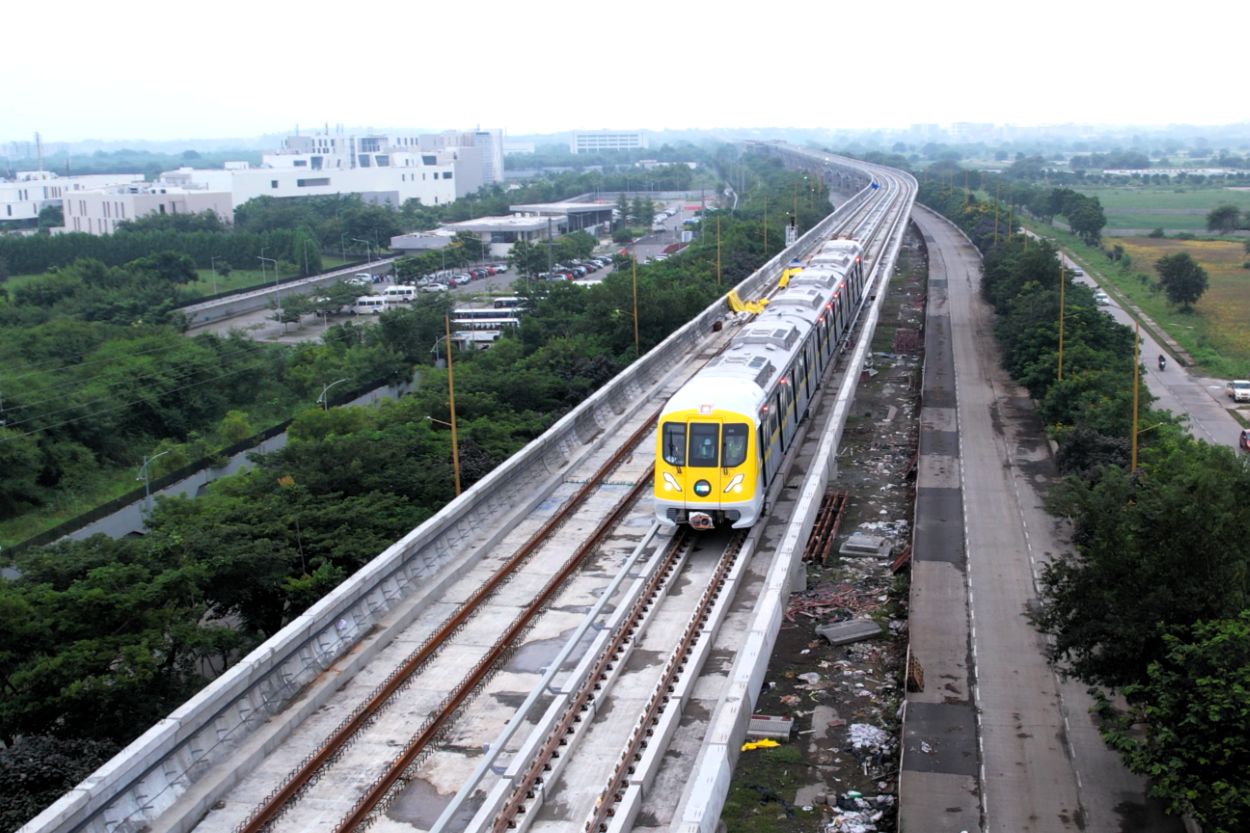
 The Gist: Indore Metro’s underground expansion beyond Khajrana Square has hit a significant hurdle. While underground construction near the airport is moving ahead with the arrival of the Tunnel Boring Machine (TBM), the 3.3-km stretch from Khajrana towards the city centre remains stalled due to alignment disputes, station-related concerns, and pending approvals. The delay has once again highlighted the challenge of executing mega infrastructure projects in densely populated urban areas.
Key Highlights
 Underground Metro work beyond Khajrana is currently stalled.
 The affected stretch is approximately 3.3 km, connecting Khajrana with the city’s core.
 Differences over station locations, local concerns, and project planning have delayed construction.
 Meanwhile, underground construction near the Airport corridor is progressing separately with TBM preparations.
Why It Matters
This stretch is among the most crucial sections of the entire Metro network. It connects Indore’s busiest commercial, institutional, and heritage areas. Every delay pushes back the day when the Metro can function as a fully integrated city-wide transport system.
The Story
Every major infrastructure project eventually reaches its most difficult phase.
For the Indore Metro, that phase appears to be the underground corridor beyond Khajrana Square.
Unlike elevated sections built along wider roads, this part of the Metro must pass beneath one of Indore’s most densely developed urban corridors. The alignment includes important commercial markets, residential neighbourhoods, and heritage-sensitive zones, making construction significantly more complex.
According to recent reports, work on this underground stretch has slowed due to unresolved issues related to station locations, local objections, and planning decisions. The discussion surrounding the proposed Chhota Ganpati Metro Station has become one of the prominent issues, illustrating the challenge of balancing modern infrastructure with the interests of local communities.
Ironically, while one underground section waits for clarity, another is moving ahead. The arrival of the Tunnel Boring Machine near the Airport marks progress on a different part of the underground network, demonstrating that engineering capability is no longer the primary constraint. The bigger challenge now lies in coordination, consensus, and timely decision-making.
Metro systems are unlike standalone infrastructure projects. Their value depends on continuity. A partially completed corridor cannot deliver the same economic, environmental, or mobility benefits as a fully operational network.
For commuters, businesses, and investors, every delayed kilometer postpones improved connectivity, lower travel times, and reduced congestion. For the city, it also delays the long-term shift from private vehicles to sustainable public transport.
 Indore Talk Take
Building a Metro through a living city is never just an engineering exercise, it is equally a test of governance, planning, and public consensus.
Residents have legitimate concerns about construction impacts, businesses worry about disruption, and authorities must ensure that infrastructure is built safely and responsibly. But prolonged uncertainty benefits no one.
Indore’s Metro represents one of the city’s largest public investments. Its success will depend not only on world-class engineering but also on transparent communication, faster decision-making, and meaningful stakeholder engagement. Because in the end, a Metro network is only as strong as its weakest unfinished link.
Indore Talk | Beyond the Headlines, Into the City’s Story
Bringing you the developments, debates, and decisions shaping the future of Indore.