


⚡ The Gist
Noise pollution from loudspeakers, DJs and high-volume sound systems has come under scrutiny in the Madhya Pradesh High Court’s Indore Bench.
A Public Interest Litigation has sought stronger enforcement of noise-control rules, particularly regarding loudspeakers at religious places, DJs on roads and high-volume programmes continuing beyond permitted hours. The court has now fixed September 22, 2026, for final arguments in the matter.
The issue is not about stopping celebrations or religious programmes. It is about ensuring that existing noise limits and time restrictions are actually followed.
The Story
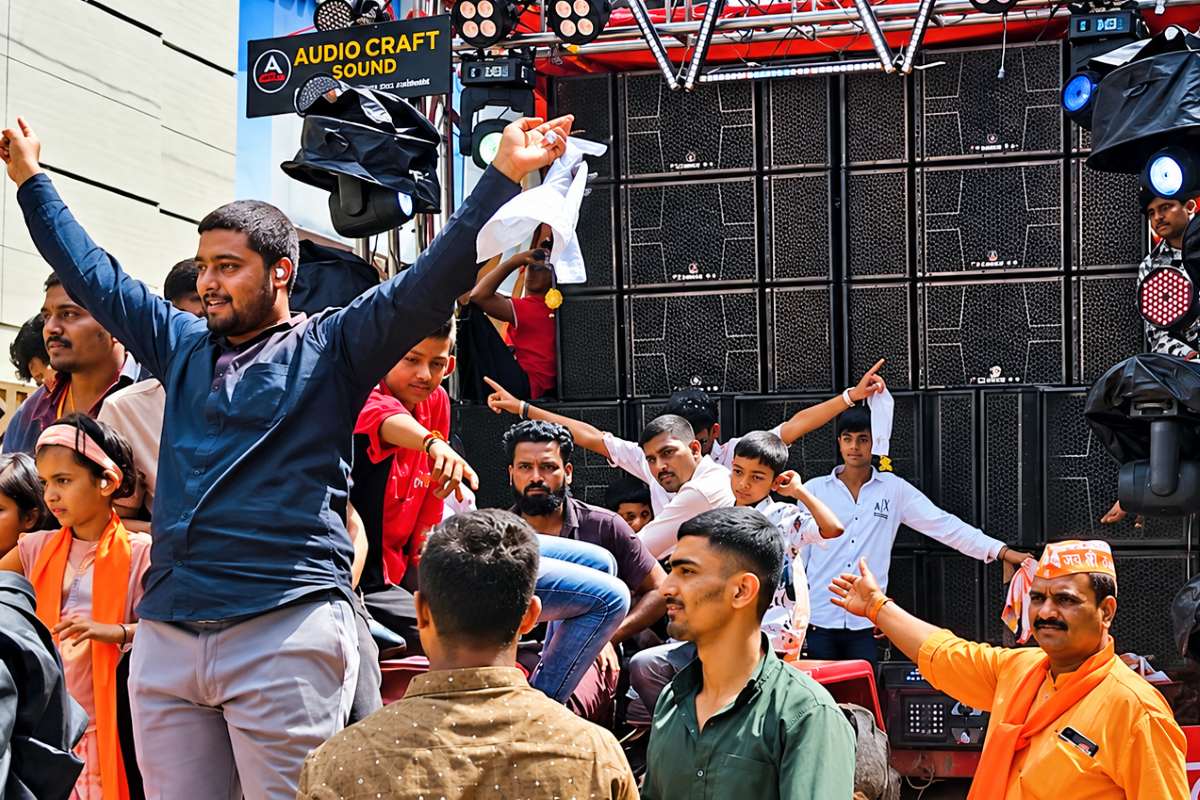
The PIL before the High Court raises concerns over increasing noise levels in different parts of Indore. The petition alleges that loudspeakers are being used at high volumes at religious places and that DJs and sound systems are frequently creating noise on public roads.
One of the key concerns raised is the use of loudspeakers and high-volume sound systems after 10 PM. The petition has sought restrictions on programmes at religious places and other open spaces when sound levels exceed the prescribed limits.
The Central Noise Pollution (Regulation and Control) Rules, 2000 already regulate the use of loudspeakers and public-address systems. Written permission is required for their use, and their use at night between 10 PM and 6 AM is generally restricted, subject to specified exceptions.
The rules also establish different permissible ambient noise standards for industrial, commercial, residential and silence zones. Areas around hospitals, educational institutions and courts can be declared silence zones under the rules. The matter has gained significance because the concern is not simply the existence of rules but their implementation on the ground.
Indore Police has previously taken action against DJ operators for allegedly violating prescribed timings and noise standards. In one such case, police seized multiple DJ sound systems, amplifiers and related equipment and registered a case under the Madhya Pradesh Kolahal Niyantran Adhiniyam and other applicable provisions. The High Court has also previously dealt with questions surrounding loudspeaker restrictions and enforcement of noise-control provisions in Madhya Pradesh.
In the current PIL, the final arguments are scheduled for September 22. The proceedings could therefore bring renewed attention to how authorities monitor sound levels, grant permissions and act when violations are reported. For residents, the issue has a very practical dimension. Noise from amplified music, roadside DJs and loudspeakers can affect residential neighbourhoods, hospitals, educational areas and other sensitive locations, particularly when it continues late into the night.
At the same time, enforcement has to operate within the legal framework governing religious, cultural and public events, including the exemptions and permissions provided under applicable rules.
The larger question is therefore straightforward: Are the existing rules sufficient if they are not consistently enforced?
🎙️ Indore Talk Take
Indore does not necessarily need more rules to address noise pollution. It needs consistent implementation of the rules that already exist.
Celebration, religion, music and public events are all part of city life. But the right to celebrate does not automatically mean the right to impose excessive noise on everyone around.
The High Court proceedings put the spotlight on an important civic principle:
Sound can be part of a celebration. But noise pollution should not become someone else’s daily burden.