


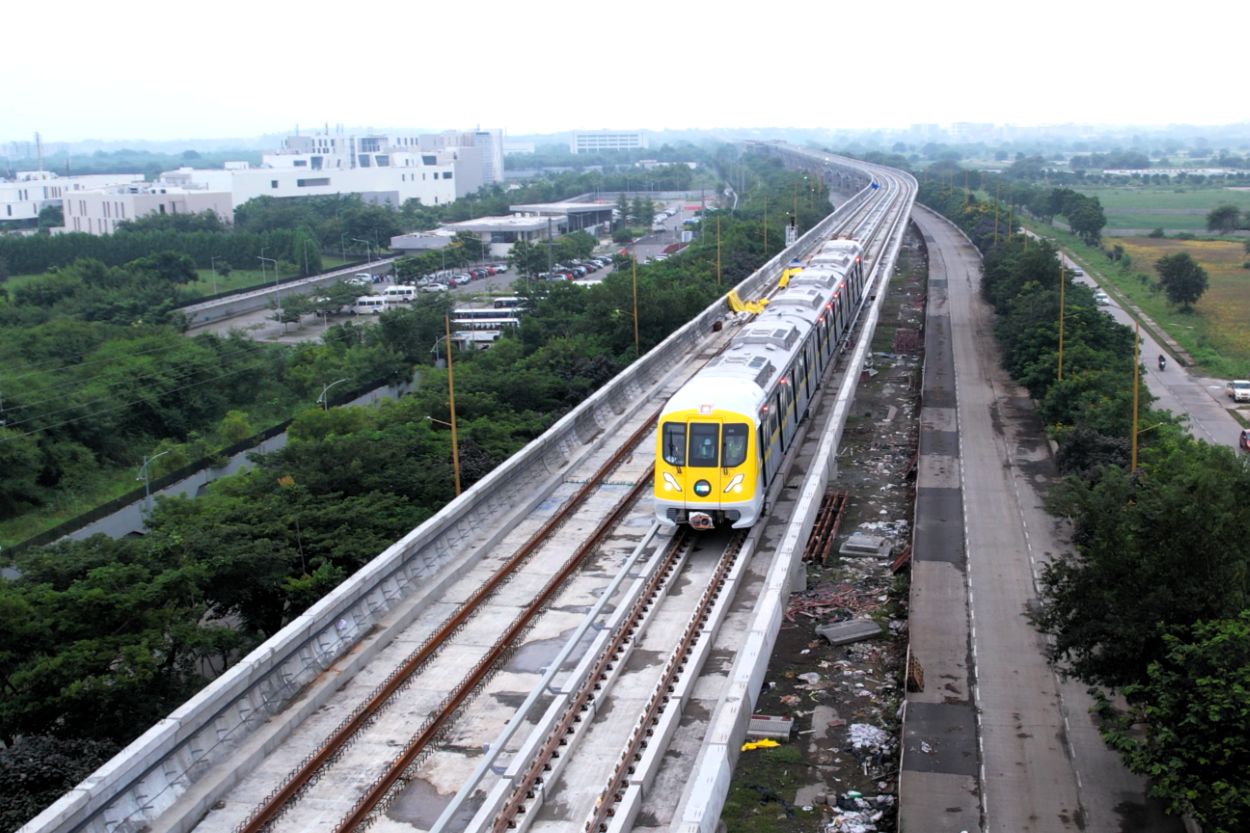
 The Gist: Indore Metro is entering a new phase with the construction of its underground tunnel near Devi Ahilyabai Holkar Airport. The upcoming stretch will connect the elevated corridor with the city’s underground section, making it one of the most technically advanced parts of the Metro project. The airport corridor is expected to improve connectivity while minimizing disruption in one of Indore’s busiest urban zones.
Key Highlights
 Metro tunnelling work near the airport is set to begin.
 The underground section will connect the airport with the city’s metro network.
 The project includes an underground station near the airport terminal.
 The underground alignment is designed to reduce land acquisition and traffic disruption in densely developed areas.
Why It Matters
Underground metro infrastructure is far more than a construction milestone. It reflects the evolution of Indore into a city capable of delivering complex, world-class urban transport while improving connectivity for residents, businesses, and visitors.
The Story
For decades, Indore’s growth has largely expanded outward through wider roads, flyovers, and new residential corridors. The Metro project is now adding another dimension to the city’s infrastructure below the surface.
The upcoming underground tunnel near Devi Ahilyabai Holkar Airport will form a crucial part of the Indore Metro’s Yellow Line. Unlike elevated corridors, underground construction allows metro connectivity through densely populated urban areas where acquiring land or building viaducts would be difficult and highly disruptive.
The airport station is expected to become one of the city’s most important transport hubs, offering seamless access between air travel and public transit. For business travellers, tourists, students, and daily commuters, such integration can significantly reduce travel time while encouraging greater use of public transport.
However, underground metro construction is among the most challenging forms of urban infrastructure. Tunnel boring requires advanced engineering, continuous monitoring of soil conditions, and careful planning to ensure that nearby roads, buildings, and airport operations remain unaffected.
Beyond engineering, the project represents a long-term investment in how Indore will move in the coming decades. As the city’s population grows and vehicle ownership continues to rise, expanding road capacity alone will not solve traffic congestion. High-capacity public transport systems like the Metro will play an increasingly important role in supporting sustainable urban mobility.
The airport tunnel is therefore not just another construction activity, it is a step toward building an integrated transport network that connects road, rail, and air travel for the future.
 Indore Talk Take
Every great city eventually reaches a point where it can no longer expand only above the ground, it must also innovate below it.
The airport tunnel is more than an engineering achievement; it represents Indore’s ambition to think beyond conventional infrastructure. While construction may temporarily inconvenience commuters, the long-term benefits could reshape how people experience the city. The real success, however, will depend not only on completing the tunnel but on delivering a metro system that is efficient, well-integrated, and accessible to every citizen. Because the future of mobility isn’t just about building more roads, it’s about giving people better choices.
 Indore Talk | Beyond the Headlines, Into the City’s Story
Bringing you the developments, debates, and decisions shaping the future of Indore.