


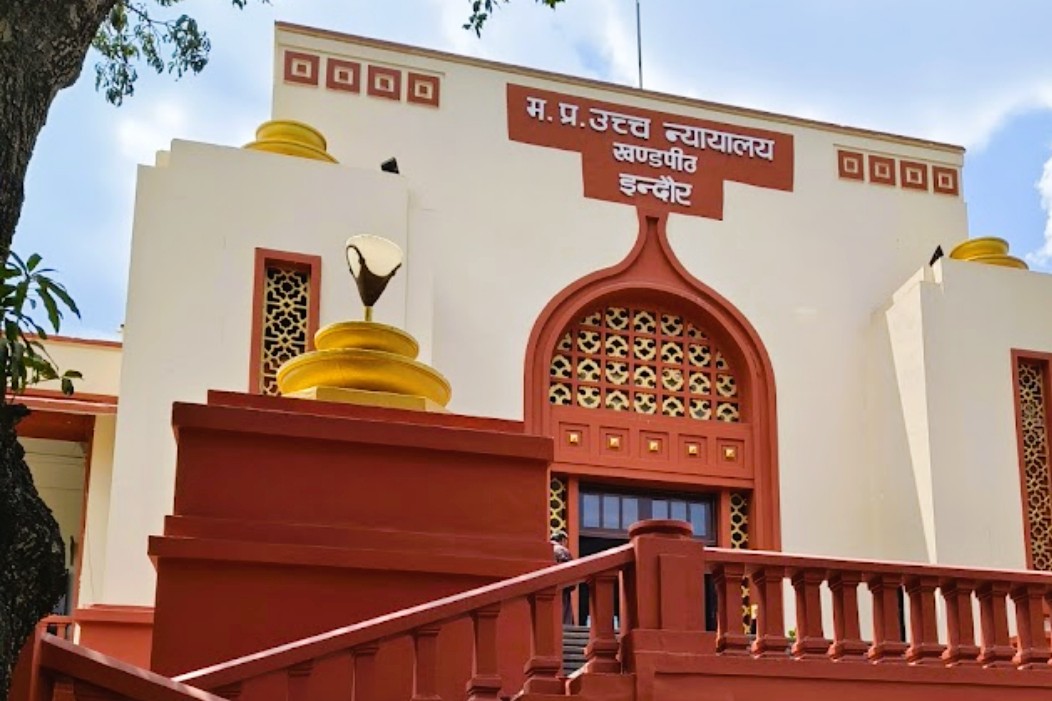
⚡ The Gist: Indore’s traffic problem has now drawn a sharp observation from the High Court itself.
During a hearing on the city’s worsening traffic situation, the court questioned why congestion and traffic-rule violations continue despite hundreds of cameras and traffic personnel across the city. The court also pointed out that violations happen right outside the court premises, including vehicles without number plates and vehicles fitted with hooters.
The issue is no longer simply about traffic jams. It is about enforcement, planning and whether the city’s traffic management system is actually working on the ground.
The Story
Traffic congestion has become a daily reality for Indore. During peak hours, major roads and junctions regularly slow down, affecting commuters, public transport, emergency movement and the overall efficiency of the city.
The High Court’s observation makes the situation even more significant because the problem was visible in a place where compliance with the law should ideally be unquestionable. If vehicles can violate traffic rules in front of the court and continue moving despite traffic personnel being present, it raises a fundamental question: how effective is enforcement when violations happen in plain sight?
According to the report, the court was told that Indore has more than 600 traffic cameras and traffic personnel deployed at important intersections. Yet the presence of technology and manpower has not automatically translated into disciplined traffic movement.
This exposes a larger gap between monitoring and management. Cameras can record violations. Challans can penalise offenders. Traffic police can manage junctions. But these measures alone cannot replace a comprehensive traffic plan designed around how Indore actually moves.
The hearing also highlighted concerns over vehicles without number plates and vehicles using hooters. Such violations are particularly troubling because traffic rules lose their deterrent value when visible non-compliance appears to go unchecked.
The petitioner’s side reportedly argued that authorities are focusing heavily on challan-based enforcement while adequate attention is not being given to a broader traffic-management plan. The court has also sought information regarding the movement of heavy vehicles inside the city, an issue that can significantly affect congestion on major routes.
For a rapidly expanding city, traffic cannot be managed only after roads are clogged. Urban growth, commercial expansion, public transport, construction activity, parking demand and freight movement all need to be considered together.
Indore is investing in flyovers, metro connectivity, intelligent traffic systems and other mobility infrastructure. But infrastructure can solve only part of the problem. Road discipline and enforcement have to move at the same speed.
🎙️ Indore Talk Take
The most uncomfortable part of this story is not that traffic rules are being broken. It is that the High Court reportedly found violations right outside its own premises.
That should make Indore pause.
A city does not become traffic-efficient simply because it has cameras, challans, flyovers or a metro. It becomes traffic-efficient when rules are predictable, enforcement is consistent and road planning is proactive.
Indore needs to move from “catch the violator” to “design a system that prevents violations.”
Because if traffic discipline cannot be ensured where the law itself is watching, how can we expect it to become a culture across the city?