


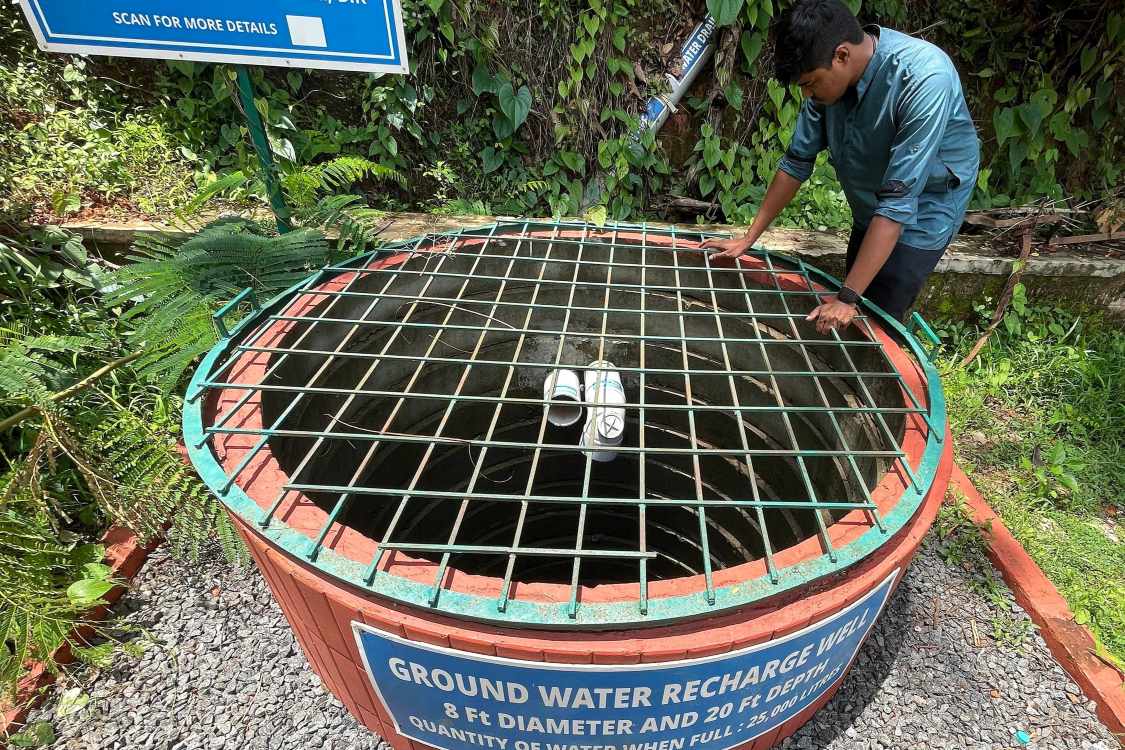
⚡ The Gist: Indore is facing a growing groundwater challenge. While the city continues to depend heavily on groundwater, rainwater harvesting is still not reaching its full potential. Against a target of more than 15,000 buildings, rainwater harvesting systems have reportedly been installed in around 10,000–12,000 buildings.
The bigger concern is what happens to the rain that does fall. Instead of being captured and used to recharge groundwater, large volumes of rainwater continue to flow into drains and away from the city.
For Indore, the challenge is no longer just getting more water. It is about saving the water it already receives.
The Story
Indore’s water story has a contradiction at its centre. Every monsoon, the city receives thousands of litres of rainwater, yet the same city continues to worry about falling groundwater levels and water availability in the summer. The problem is not simply how much rain Indore receives, but how effectively the city captures and retains that rain.
Groundwater has become increasingly important for a rapidly expanding Indore. According to the reported data, the depth at which groundwater is available has increased from around 150 metres in 2012 to nearly 160 metres by 2023. While several factors influence groundwater levels, the trend highlights the growing pressure on the city’s underground water reserves.
This makes rainwater harvesting far more important than simply being a building regulation. It should be treated as an essential part of Indore’s long-term water infrastructure.
The Municipal Corporation had set a target of installing rainwater harvesting systems in more than 15,000 buildings. However, the reported implementation remains below that target, with systems installed in approximately 10,000–12,000 buildings. The gap represents thousands of rooftops from which rainwater could potentially be captured and directed towards groundwater recharge.
The potential is enormous. If thousands of buildings across the city were connected to properly designed and maintained recharge systems, a significant quantity of rainwater could be pushed back into the ground during every monsoon. Instead of becoming runoff on roads and eventually entering stormwater drains, at least a portion of that water could become an investment in Indore’s future water security. But installation alone is not enough.
A rainwater harvesting system that is blocked, poorly designed, disconnected or not maintained is effectively useless. The focus therefore needs to move beyond counting installations towards monitoring whether these systems are actually functioning and contributing to groundwater recharge.
Urbanisation makes the challenge even bigger. As Indore expands, more open land is replaced by concrete, roads, parking areas and buildings. This reduces the natural surface through which rainwater can seep into the ground. At the same time, the city’s growing population and expanding economic activity continue to increase water demand.
This creates a simple equation: more concrete, more water consumption and less natural recharge. Rainwater harvesting can help address at least one part of that equation.
Imagine if every large building, apartment complex, commercial establishment, school and institution treated its rooftop as a potential water-recharge system. Instead of sending rainwater away, buildings could become thousands of decentralised recharge points across the city.
Indore has already demonstrated that large-scale civic change is possible when administration and citizens work together. The city’s next challenge could be to bring the same collective approach to water conservation.
Because groundwater is invisible, its depletion often goes unnoticed until the problem becomes severe. A dry borewell is only the final symptom of a much longer process.
The time to recharge the groundwater is when the rain is falling not when the summer water crisis arrives.
🎙️ Indore Talk Take
Indore doesn’t just have a water problem. It has a water management opportunity.
Every monsoon, water falls from the sky. We allow much of it to run across concrete roads, enter drains and disappear. A few months later, we worry about groundwater levels and water availability.
The question is simple: Why can’t the rain that causes waterlogging today become the water that saves us tomorrow?
Rainwater harvesting should not be reduced to a certificate, a compliance requirement or a structure built only for inspection. It should be functional, monitored and measurable.
Indore has shown the country that it can lead in cleanliness. Now it has an opportunity to lead in something even more fundamental urban water security. Because the future of Indore’s water supply may not only depend on how much water we bring into the city. It may depend on how much rainwater we refuse to let leave it.