


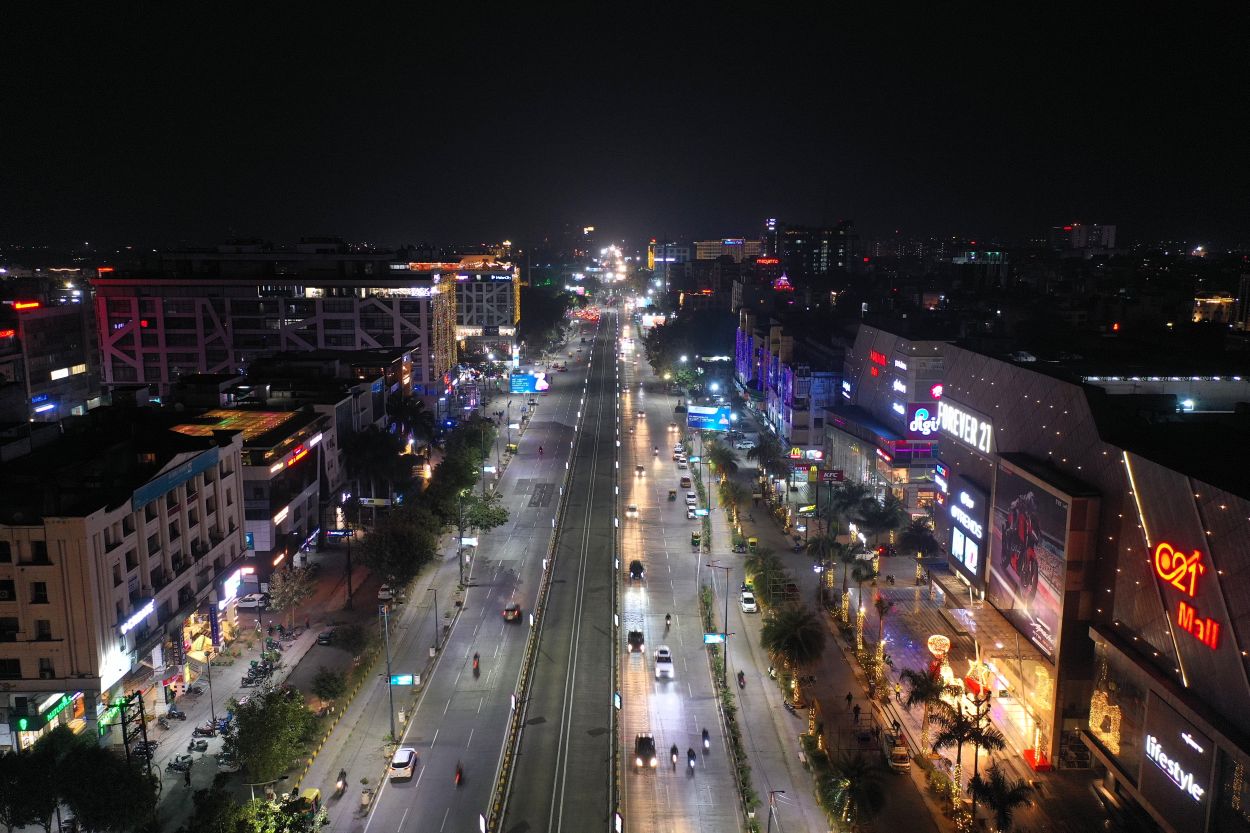
⚡ The Gist: Indore is set to see a wider return of its night-time economy, with hotels, restaurants, shopping malls, multiplexes, private offices and other eligible establishments allowed to operate round the clock in urban areas. The move follows the Centre’s push to encourage extended business hours and support sectors such as IT, BPOs and industries that operate in multiple shifts.
However, this is not simply a return of the earlier AB Road experiment. The proposed 24×7 framework covers the entire city, while liquor shops and bars will continue to follow their existing closing-time rules.
Key Highlights
- 🌙 Eligible establishments can operate 24×7 in urban areas.
- 🏙️ The provision is expected to extend beyond the earlier AB Road/BRTS corridor experiment.
- 🍽️ Hotels, restaurants, malls, multiplexes, offices and other establishments can benefit.
- 🍺 Liquor shops and bars will not get extended operating hours under this provision.
- 👮 Police, municipal and administrative agencies will have greater responsibility for night-time monitoring.
- 👩💼 Establishments employing women at night will need to ensure appropriate safety and transport arrangements.
Why It Matters
A 24×7 city can create more jobs, support businesses, improve convenience and strengthen Indore’s position as a commercial and IT hub.
But a city cannot simply stay open at night—it must also stay safe, accessible, clean and well-managed.
The Story
Indore has always had a relationship with the night.
Sarafa comes alive after dark. Chappan Dukan attracts visitors late into the evening. Businesses, food outlets, offices and entertainment spaces have gradually created a culture where the city does not completely switch off after sunset.
Now, that culture could be expanding significantly.
The state government’s decision to permit eligible establishments to operate around the clock is expected to take Indore’s night-time economy beyond specific pockets and into a much broader city-wide framework. The move is linked to the Centre’s push to promote night-time economic activity and support sectors such as IT, call centres, manufacturing and businesses operating in multiple shifts.
For Indore, the idea is not entirely new.
An earlier experiment allowed night-time activity along approximately 11 kilometres of the AB Road/BRTS corridor. According to the report, the experiment continued for nearly 22 months before being discontinued amid controversy surrounding what was labelled “night culture.” Importantly, the operating hours of liquor shops and bars were not extended during that experiment.
The new framework therefore raises a larger question: Can Indore build a night economy without repeating the problems that surrounded the earlier experiment?
The economic opportunity is significant.
A city that remains active beyond traditional business hours can create additional employment, support restaurants and retail businesses, improve convenience for travellers, and make better use of commercial infrastructure. For employees working night shifts, particularly in IT and BPO sectors, access to food, transport, pharmacies and other essential services can make working at night considerably easier.
But opening businesses is only one part of the equation.
If the city operates 24×7, public systems also need to think 24×7.
Police presence, street lighting, public transport, parking management, sanitation, emergency response and road safety will all become increasingly important. Women working late at night will require safe transport and workplace security, and employers will carry an important responsibility in ensuring those arrangements.
There is also an important distinction between a 24×7 economy and unrestricted nightlife.
The new provision does not mean that every type of establishment can ignore existing laws. Alcohol-related businesses, for example, will continue to operate within their prescribed hours.
That distinction matters because the success of a night economy should ultimately be measured by economic activity and public convenience—not by the number of people on the streets at 2 AM.
For Indore, this could be an opportunity to create a more mature urban model—one where businesses remain competitive, workers have better facilities, visitors feel comfortable, and residents can still expect safety and civic discipline.
🎙️ Indore Talk Take
A 24×7 Indore sounds exciting. But a 24×7 city needs 24×7 governance.
If restaurants and offices can remain open through the night, can citizens expect reliable transport at 2 AM?
If more women are working night shifts, are safe mobility and workplace security ready?
If commercial activity continues throughout the night, who will manage parking, waste, noise, traffic and public safety?
The success of Indore’s night economy will not be determined by how late businesses remain open. It will be determined by how responsibly the entire city functions after midnight.
Indore should not simply become a city that never sleeps.
It should become a city where people can work, travel, eat and live safely—at any hour.
📍 Indore Talk | Beyond the Headlines, Into the City’s Story
Bringing you the developments, debates, and decisions shaping the future of Indore.