


⚡ The Gist
Indore’s below-normal rainfall this monsoon is now visible in the city’s water bodies. Yashwant Sagar, Bilawali and Sirpur have not reached their full levels, raising concerns over water availability in the months ahead.
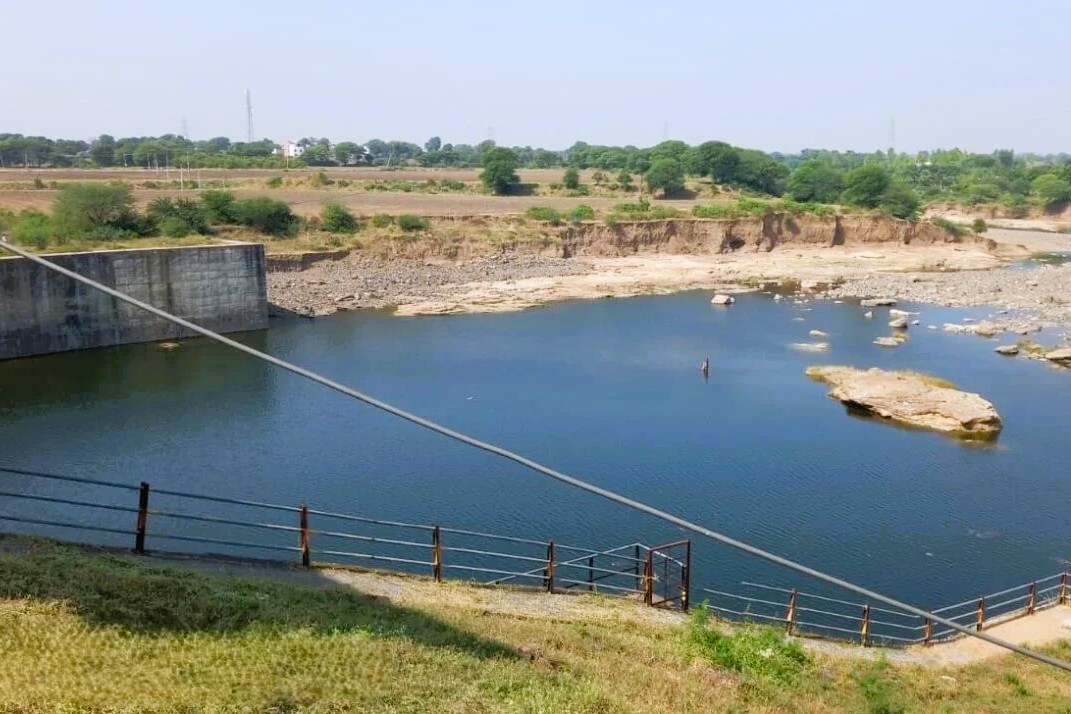
Yashwant Sagar currently has around 16 feet of water against its full level of 19 feet. The reservoir supplies around 30 MLD of water daily to five city tanks, making its storage particularly important for Indore’s water-supply system.
The situation is a reminder that a weak monsoon does not end when the rain stops. Its impact can continue into the next summer.
The Story
Indore has received around 23 inches of rainfall so far this year, but the distribution of rain has been uneven. A lack of sustained heavy spells has meant that several of the city’s important ponds and reservoirs have not received enough inflow to reach their full capacity.
Yashwant Sagar is among the most important water sources in this situation. The reservoir is currently around three feet short of its full level. Last year, it had overflowed, but this year the water level has remained significantly lower.
Around 30 million litres of water per day is currently being drawn from Yashwant Sagar and supplied through five city tanks. If the reservoir does not receive sufficient additional inflow, the available supply could become more constrained after March as the stored water gets depleted.
The condition of Bilawali Lake is also significant. The water body plays an important role in maintaining groundwater levels in areas around Khandwa Road and nearby colonies. This year, however, Bilawali has not filled as it normally would during a strong monsoon.
The two Sirpur water bodies have also not reached their full levels. The main Sirpur pond has around 11 feet of water, while the smaller Sirpur pond has around 14 feet. Neither has overflowed this year.
The concern is not simply about the amount of water visible in a pond. Reservoir storage affects the city’s water-supply planning, while local water bodies also contribute to groundwater recharge. When these systems receive less recharge during the monsoon, their impact can be felt months later.
There is still some possibility of improvement if the city receives substantial rainfall before the monsoon fully withdraws. Weather forecasts have indicated the possibility of rain and thunderstorms in the region in the coming days.
However, relying on a late-season rainfall spell is not a long-term water strategy.
For a rapidly growing city like Indore, every monsoon needs to be treated as an opportunity to store water, recharge groundwater and strengthen the next year’s water security.
🎙️ Indore Talk Take
The empty ponds of Indore are telling a story that cannot be measured only by today’s water supply. When Yashwant Sagar receives less water, when Bilawali remains below capacity and when Sirpur does not overflow, the impact can eventually move from water bodies to groundwater, and from groundwater to household taps.
This is why rainwater harvesting, protection of ponds, desilting, recharge structures and responsible water consumption cannot remain seasonal conversations.
Indore needs to save the rain when it comes because the real test of a monsoon is not how much rain falls, but how much water the city manages to keep.