


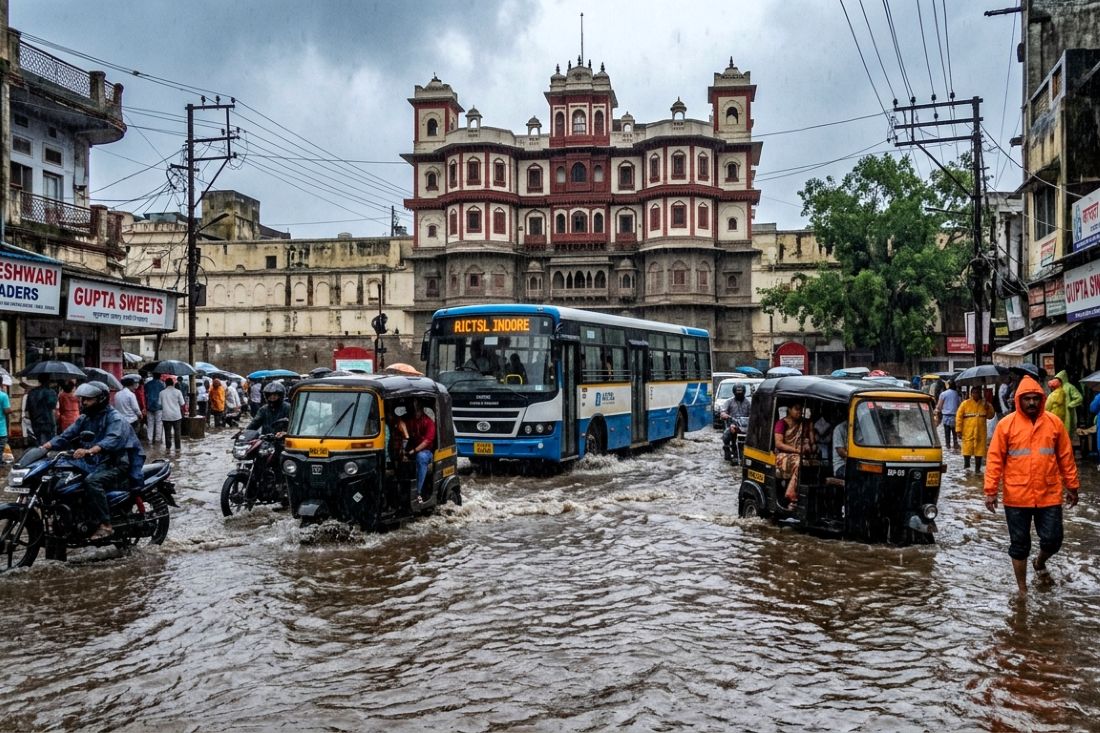
⚡ The Gist: Every monsoon, Indore’s roads tell the same story, flooded intersections, stalled traffic, wasted fuel, and frustrated commuters. This year, waterlogging has been reported at all major locations, with multiple departments reportedly sharing responsibility for the issue.
But what if the millions of liters of rainwater accumulating on our roads weren’t treated as a problem—but as a resource?
Key Highlights
- Waterlogging continues to affect key locations across Indore.
- Traffic congestion, vehicle breakdowns, and fuel wastage have become routine during heavy rainfall.
- Crores have been invested in roads, flyovers, and drainage, yet recurring flooding remains a challenge.
- Experts increasingly advocate rainwater harvesting and urban water recharge as part of the long-term solution.
Why It Matters
Rainwater that floods roads today could recharge groundwater tomorrow. The challenge isn’t the rain, it’s how the city manages it.
The Story
Indore has earned national recognition for cleanliness, efficient waste management, and civic innovation. Yet every monsoon exposes a different reality beneath the city’s roads.
A few hours of heavy rain are enough to transform several major intersections into temporary ponds. Commuters spend hours navigating traffic jams, two-wheelers struggle through submerged roads, public transport slows down, businesses lose productive hours, and thousands of litres of fuel are burned while vehicles idle in long queues. Reports indicate that waterlogging has again affected key locations across the city, with different civic agencies pointing to overlapping infrastructure responsibilities.
The immediate response is often pumping water out and restoring traffic. But that raises an important question: Where does all that rainwater eventually go?
Instead of allowing rainwater to collect on roads before flowing into drains, can future infrastructure be designed to capture and recharge it?
Around the world, cities are increasingly investing in permeable pavements, recharge wells beneath intersections, roadside infiltration trenches, rain gardens, retention ponds, and integrated storm water harvesting systems. Such solutions reduce flooding while simultaneously replenishing groundwater.
For a rapidly growing city like Indore, where water demand continues to increase every year, rainwater should not be viewed as a seasonal inconvenience. It should be considered a valuable natural asset.
As new roads, metro corridors, flyovers, and urban redevelopment projects continue, integrating storm water harvesting into every major infrastructure project could help reduce waterlogging while strengthening the city’s long-term water security.
🎙️ Indore Talk Take
Every monsoon, Indore spends enormous effort removing rainwater from its roads. Perhaps the next chapter of urban planning should focus on capturing that same water instead.
A Smart City isn’t one that simply drains away rainwater faster—it is one that stores it, reuses it, and lets it recharge the earth beneath. Waterlogging and water scarcity may appear to be separate problems, but in reality, they are two sides of the same challenge. If Indore can connect storm water management with rainwater harvesting, the city won’t just solve a seasonal inconvenience—it could build a more resilient and water-secure future.
📍 Indore Talk | Beyond the Headlines, Into the City’s Story
Bringing you the developments, debates, and decisions shaping the future of Indore.