


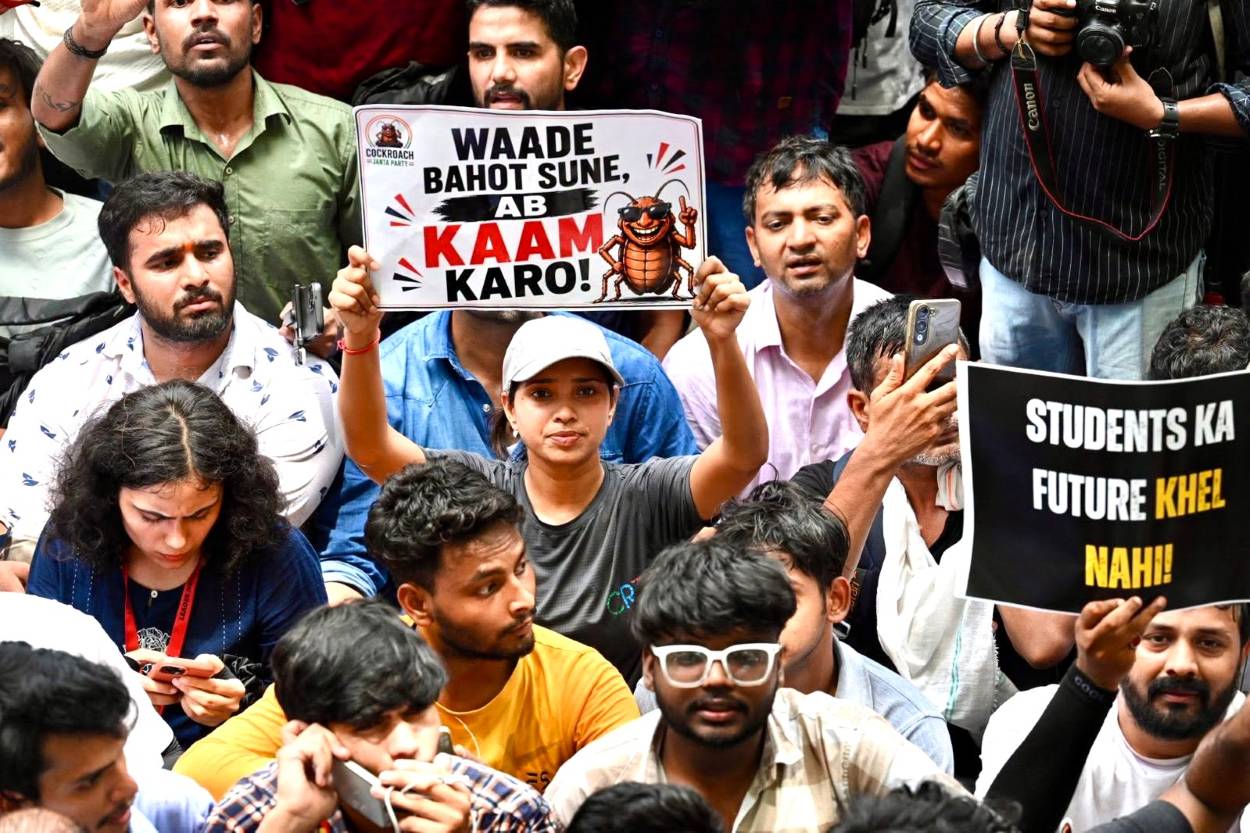
There are moments in history that begin in Parliament. And then there are moments that begin with a single comment.
A remark… A satire… A meme… An Instagram page… And suddenly, what appeared to be internet humour transforms into the voice of millions.
Perhaps, for the first time, India witnessed something that political analysts have been predicting for years, Generation Z is not merely a generation that consumes social media; it is a generation capable of influencing public discourse through it.
The events surrounding the emergence of the Cockroach Janta Party (CJP), followed by nationwide student mobilization over the NEET controversy, became more than just a viral internet trend. They evolved into a case study of how digital-native citizens communicate, organize, and participate in democratic conversations in the 21st century.
When Memes Become a Language of Protest
Every generation develops its own language of resistance. Earlier generations wrote pamphlets. Then came television debates. Later, hashtags became the preferred medium. For Gen Z, memes have emerged as a powerful form of political expression.
The rise of the Cockroach Janta Party illustrated this shift. While many dismissed it as satire, countless young people interpreted it differently. It became a symbol of frustration, sarcasm, and dissatisfaction that traditional political language often fails to express.
Memes may appear humorous on the surface, but they frequently reflect deeper social realities.
They simplify complex emotions into instantly relatable communication.
In the digital age, humour has become one of the most effective forms of public commentary.
The NEET Controversy Changed the Conversation
At around the same time, allegations surrounding the NEET examination, concerns over paper leaks, and widespread debates about fairness in competitive examinations intensified across the country.
For millions of students, this was no longer merely about one examination.
It became a question of trust.
Students who had spent years preparing for one of India’s most competitive entrance examinations began questioning whether effort alone could guarantee opportunity.
For many families, the issue was deeply personal.
Years of preparation. Financial sacrifices. Emotional investment. Career aspirations.
All appeared vulnerable whenever questions were raised about the integrity of the examination process.
The conversation gradually shifted from examination management to institutional credibility.
When Social Media Became the Public Square
Traditionally, public movements depended heavily on newspapers and television channels to reach wider audiences.
Today, that equation has fundamentally changed. Students no longer wait for media coverage. They create it themselves. A smartphone has become a newsroom. Instagram Reels document protests. YouTube Live broadcasts demonstrations. X amplifies debates in real time. Telegram and WhatsApp groups coordinate participation. Every participant simultaneously becomes a reporter, storyteller, and citizen journalist. This represents one of the biggest transformations in democratic participation.
Earlier, news organizations decided which stories deserved national attention. Today, millions of digital users often decide what eventually becomes the news. The flow of information has become increasingly decentralized.
Understanding Gen Z Politics
Gen Z approaches politics differently from previous generations. It does not necessarily engage through traditional party structures. It participates through issues.
Education. Employment. Mental health. Climate change. Digital rights. Examination reforms. Institutional accountability.
This generation is less interested in ideological labels and more focused on outcomes. It expects faster communication. Greater transparency. Public accountability. And direct engagement.
It is comfortable challenging authority not because it rejects institutions, but because it expects institutions to function effectively.
More Than a Student Protest
The significance of the movement did not lie merely in demonstrations. Its importance lay in the message it communicated. Young people wanted assurance that their hard work still mattered. That merit would continue to be rewarded. That examination systems would remain credible. That institutions would respond before public frustration reached a breaking point. These expectations extend far beyond one examination or one policy decision. They reflect a broader demand for trustworthy governance in education.
The Bigger Questions
The movement also leaves India with several important questions. Should democratic institutions respond only after issues become national trends? Should millions of online views become a prerequisite for administrative action? Can public trust survive if students believe that their concerns receive attention only after widespread digital pressure?
These questions are not directed at any one government or political party. They concern the institutional capacity of India’s democracy. A strong education system depends not only on examinations but also on confidence in those examinations. When confidence weakens, the consequences extend beyond classrooms.
Trust Is the Foundation of Education
Every education system ultimately rests on one invisible pillar, trust.
Students trust that examinations will be fair. Parents trust that effort will be rewarded. Teachers trust that merit will be recognised. Institutions trust that society will value education. When any one of these relationships weakens, rebuilding confidence becomes far more difficult than rewriting policies. Trust cannot be restored through notifications alone. It is earned through transparency, consistency, and accountability.
The Future of Student Voice
India proudly calls itself one of the world’s youngest nations. But having a young population is not enough. The real challenge is understanding how today’s youth communicate, organize, and participate.
Gen Z is not simply asking for employment. It is asking for credibility. It is not demanding only examinations. It is demanding fairness. It is not looking merely for promises. It is expecting accountability.
Whether future student movements emerge online or offline, one lesson has become increasingly clear: Young people no longer wish to remain passive participants in conversations about education. They want to become stakeholders in shaping those conversations.
Indore Talk Academics Insight
The events surrounding the Cockroach Janta Party and the nationwide student mobilization represent more than a viral social media phenomenon. They illustrate how education, technology, and civic participation are becoming deeply interconnected. Today’s students are not just learners inside classrooms; they are active participants in public discourse. For educational institutions and policymakers, the challenge is no longer limited to conducting fair examinations, it is about building systems that inspire confidence before frustration turns into protest. In the digital era, trust has become one of the most important outcomes of education, and preserving that trust may be the greatest responsibility of every institution.