


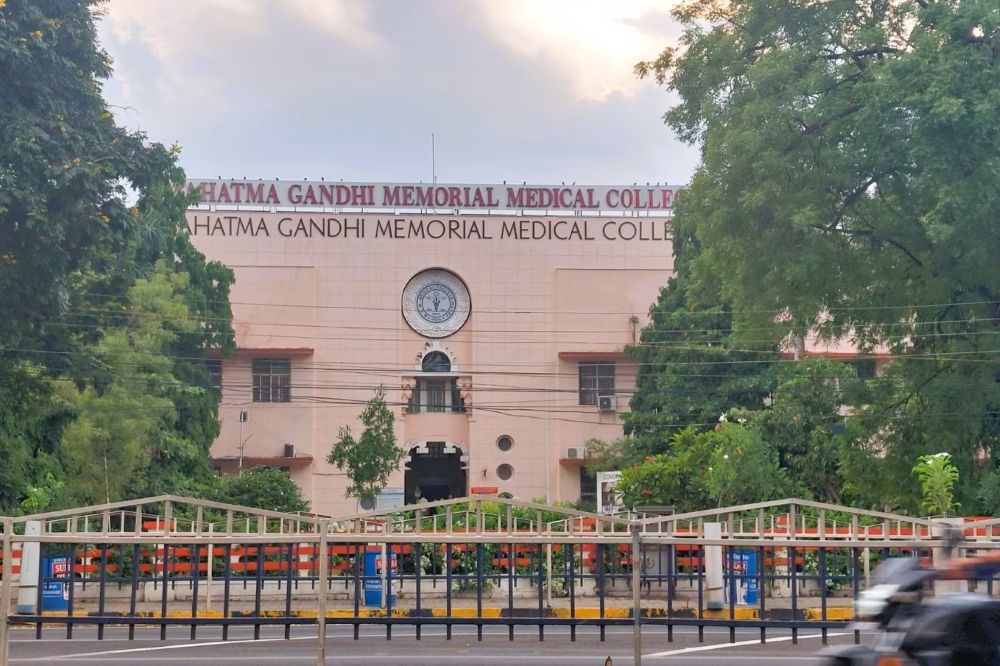
Mahatma Gandhi Memorial (MGM) Medical College, Indore, has achieved a significant milestone in medical education with the approval of 39 additional postgraduate (PG) seats.
With this expansion, the college’s total PG seat count has increased from 283 to 322, reportedly making it the highest among government and private medical colleges in Madhya Pradesh. The institution also offers 13 super-speciality seats.
Department-Wise Distribution of New Seats
The 39 additional seats have been approved across nine medical departments:
- Community Medicine: 12 seats
- Pathology: 9 seats
- Orthopaedics: 5 seats
- General Surgery: 4 seats
- Anatomy: 2 seats
- Forensic Medicine: 2 seats
- Microbiology: 2 seats
- Psychiatry: 2 seats
- Dermatology: 1 seat
The expansion will provide more opportunities for medical graduates to pursue postgraduate specialisation and advanced clinical training.
What Does This Mean for Patients?
More postgraduate seats mean a larger pool of doctors receiving specialised training at MGM and its associated hospitals.
The expansion is expected to strengthen departmental capacity, particularly in areas such as general surgery and orthopaedics. Over time, this could support greater treatment capacity, surgical services and access to specialised medical care.
However, the actual benefit to patients will depend on adequate faculty, infrastructure, clinical facilities and the availability of trained medical professionals.
Strengthening Indore’s Medical Education Ecosystem
The increase in PG seats reinforces MGM Medical College’s position as an important centre for medical education in Madhya Pradesh.
It also creates an opportunity to strengthen the connection between medical education, clinical research and public healthcare delivery.
Indore Talk Academics Insight
Expanding medical education is not just about increasing the number of postgraduate seats. It is about developing more qualified specialists who can contribute to the healthcare system.
The real measure of this achievement will be how effectively the additional seats translate into better medical services.
Medical education expansion becomes truly meaningful when its benefits reach beyond college campuses and improve the quality, accessibility and timely delivery of healthcare for ordinary patients.