


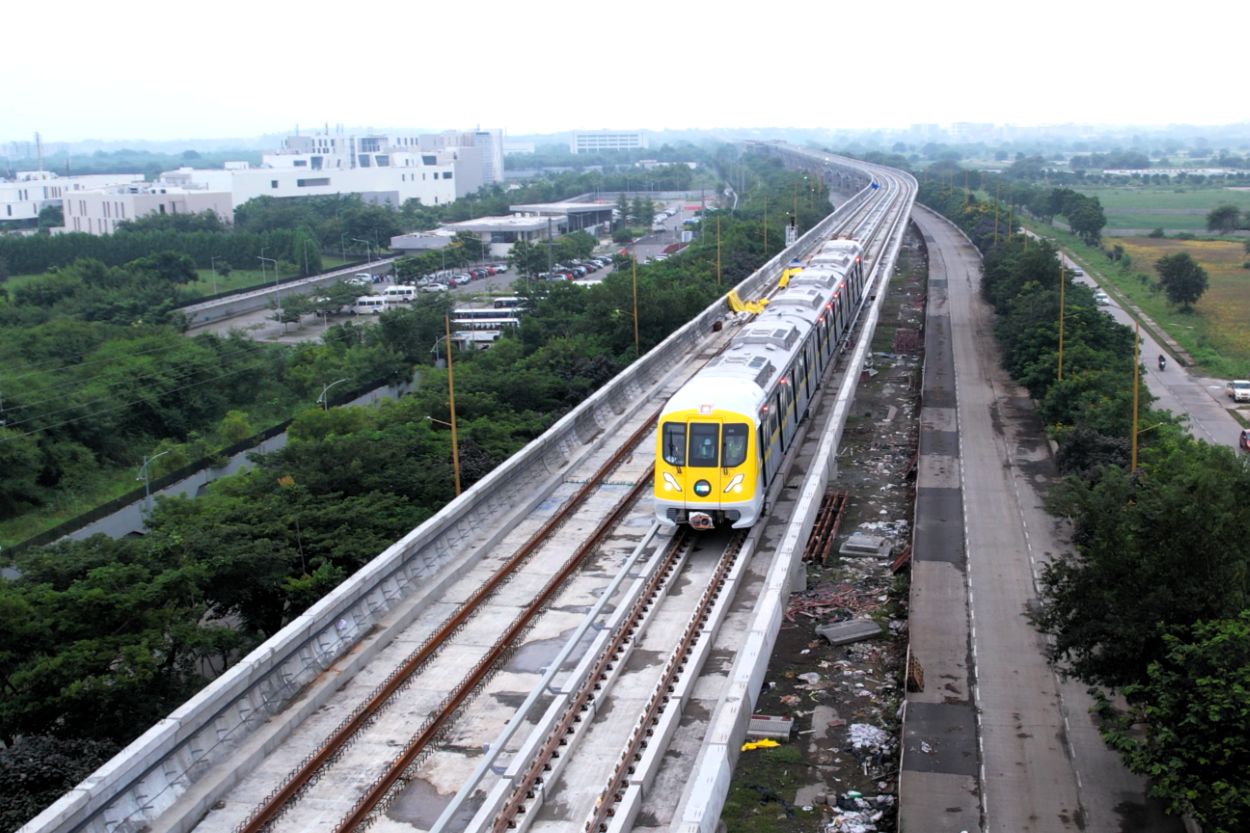
⚡ The Gist: Indore Metro is finally moving beyond its initial limited operations. From 5 September 2026, commercial passenger services will begin between Gandhi Nagar and Radisson Square, giving citizens access to a much larger stretch of the city’s Yellow Line.
The approximately 17-kilometre corridor with 16 stations connects Gandhi Nagar and Super Corridor with important commercial and urban areas towards Radisson. The service is expected to offer commuters a faster public transport alternative while helping reduce pressure on some of Indore’s busiest roads.
The Story
For Indore, the Metro has been more than an infrastructure project. It has been a long-awaited promise of a new way to move around a rapidly expanding city. After years of construction, testing and delays in starting commercial operations, that promise is now becoming a daily reality for citizens.
The next major milestone arrives on 5 September, when passenger services will begin between Gandhi Nagar and Radisson Square. The approximately 17-kilometre route will have 16 stations, extending Metro connectivity across the Super Corridor, MR-10, Vijay Nagar side and towards Radisson.
The significance of this expansion goes beyond the length of the route. The corridor connects some of Indore’s fastest-growing residential, commercial, institutional and business zones. For thousands of commuters, Metro now becomes an alternative to navigating increasingly crowded roads, particularly during peak hours.
The service follows extensive trial runs and safety testing. The corridor received permission for operations from the Commissioner of Metro Railway Safety in March 2026, after which preparations for commercial service continued. The actual launch, however, took longer than originally planned, making the start of regular passenger operations an important moment for the city.
The impact on road traffic will be closely watched. Radisson Square, Vijay Nagar and adjoining corridors already experience substantial vehicle movement. If even a portion of daily commuters shift from private vehicles to Metro, the benefits could extend beyond travel time to reduced congestion, lower fuel consumption and potentially cleaner air.
But the success of the Metro cannot be measured simply by whether trains are running.
It will depend on how effectively the system integrates with the rest of Indore’s public transport network. Last-mile connectivity, parking facilities, pedestrian access, frequency, ticketing convenience and connectivity to residential and commercial areas will determine whether people actually choose Metro over their cars and two-wheelers.
The Gandhi Nagar–Radisson corridor should therefore be viewed as the beginning rather than the destination. Indore’s larger Metro network is expected to expand further, including underground sections connecting other important parts of the city.
The city now has an opportunity to build a genuine public transport culture. But that requires citizens to see Metro not merely as a new attraction to experience once, but as a practical everyday mobility option.
🎙️ Indore Talk Take
Indore Metro has finally moved from promise to public service. But the real test begins now. A Metro does not reduce traffic simply because trains run. It reduces traffic when people choose to leave their cars and ride it. That will require reliable frequency, seamless last-mile connectivity, safe pedestrian access, convenient ticketing and an overall experience that is genuinely better than sitting in traffic.
The Gandhi Nagar–Radisson corridor is a significant beginning for Indore. But the city’s larger ambition should be to build a public transport system that makes owning a private vehicle less necessary not simply build another option alongside it.
The Metro has arrived. Now the challenge is to make Indore move with it.