


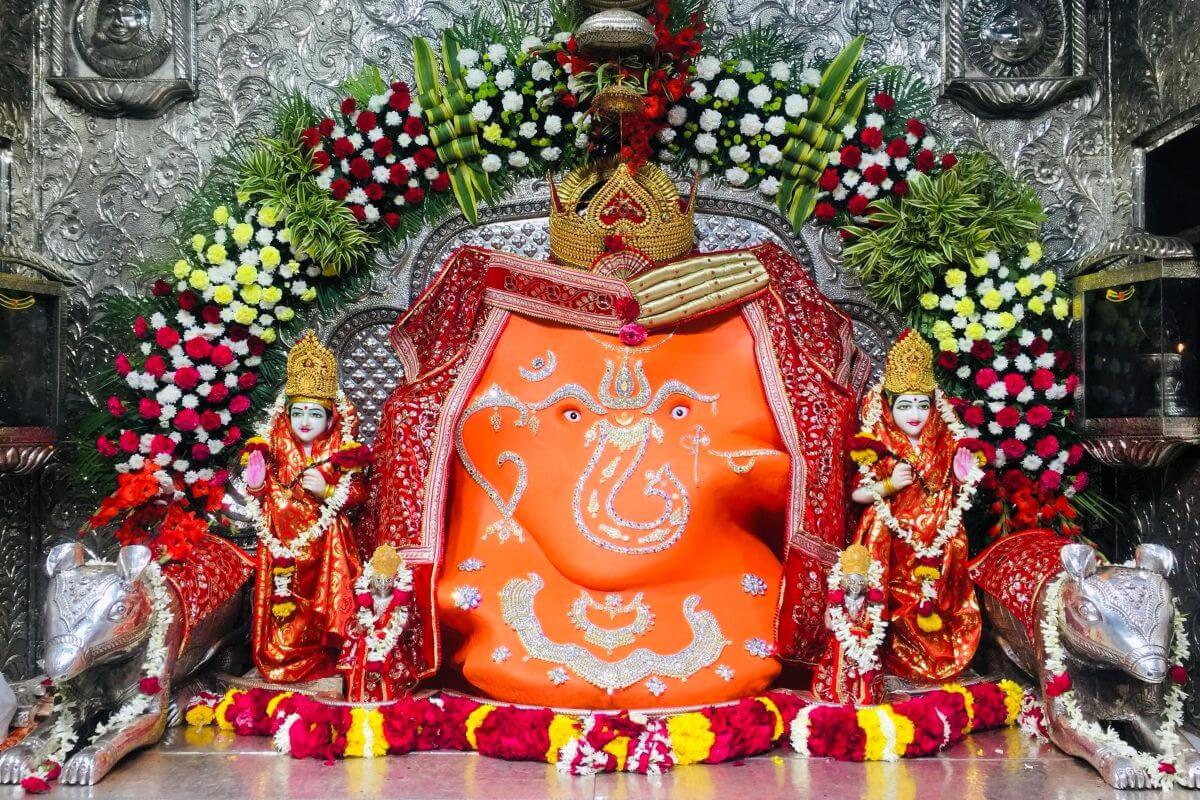
⚡ The Gist: Indore’s iconic Khajrana Ganesh Temple is gearing up for a 10-day Ganeshotsav, bringing together devotion, cultural celebrations and thousands of devotees. With 1.25 lakh modaks being offered and distributed, along with daily religious and cultural programmes, the festival is expected to draw significant crowds. To manage the rush, the traffic police have introduced a special diversion and one-way movement plan around the temple.
For devotees, the festival promises a grand spiritual experience. For the city, it is another test of crowd management, traffic planning and public cooperation.
The Story
The annual Ganeshotsav at Khajrana Ganesh Temple is more than a religious celebration for Indore. The temple is one of the city’s most prominent spiritual landmarks, and during the festival, the surrounding roads become a major movement corridor for devotees arriving throughout the day.
The celebrations began with Ganesh pujan, dhwaja pujan and the offering of 1.25 lakh modaks. Over the next ten days, devotees will also witness a series of religious and cultural programmes, including musical yoga, children’s singing competitions, Kathak performances and devotional music.
With such a large expected footfall, traffic management becomes equally important. A special movement plan has been introduced around the temple to separate entry and exit flows and reduce congestion.
The service road from Bengali Square towards Siddhivinayak Hospital has been closed for vehicular movement during the festival. Devotees travelling towards the temple are being directed through the Khajrana Square service road, Siddhivinayak Hospital, Ganeshpuri Main Road and Goyal Vihar before reaching the designated parking area.
After darshan, vehicles will exit through the Kalka Mata Temple Gate, Ganesh Mandir Tiraha and Peepal Square before moving towards Khajrana Square. Vehicles heading towards Khajrana village can use the Goya Road route.
Public transport has also been adjusted. City bus entry has been restricted on the Khajrana Square–Star Square and Peepal Square–Khajrana routes, keeping crowd movement and safety in mind.
The administration has also begun clearing parked vehicles from the affected routes, with more than 70 vehicles reportedly removed to keep the roads accessible.
These arrangements may cause inconvenience to regular commuters, but festivals of this scale require temporary changes to normal traffic patterns. The real challenge is ensuring that diversions remain clearly communicated, parking is disciplined and emergency access is never compromised.
As Anant Chaturdashi approaches, when the traditional procession and tableau will take place, the pressure on the surrounding road network is likely to increase further.
🎙️ Indore Talk Take
A city that celebrates its festivals at this scale needs to plan for people, not just events. Traffic diversions are necessary, but the success of the system will depend on how clearly they are communicated and how strictly they are followed. Devotees need convenience, commuters need clarity and emergency services need uninterrupted access.
For the next ten days, patience on the roads is as important as devotion at the temple.
Because a successful festival is not only about how grand the celebration is, it is also about how safely and smoothly the city carries it.