


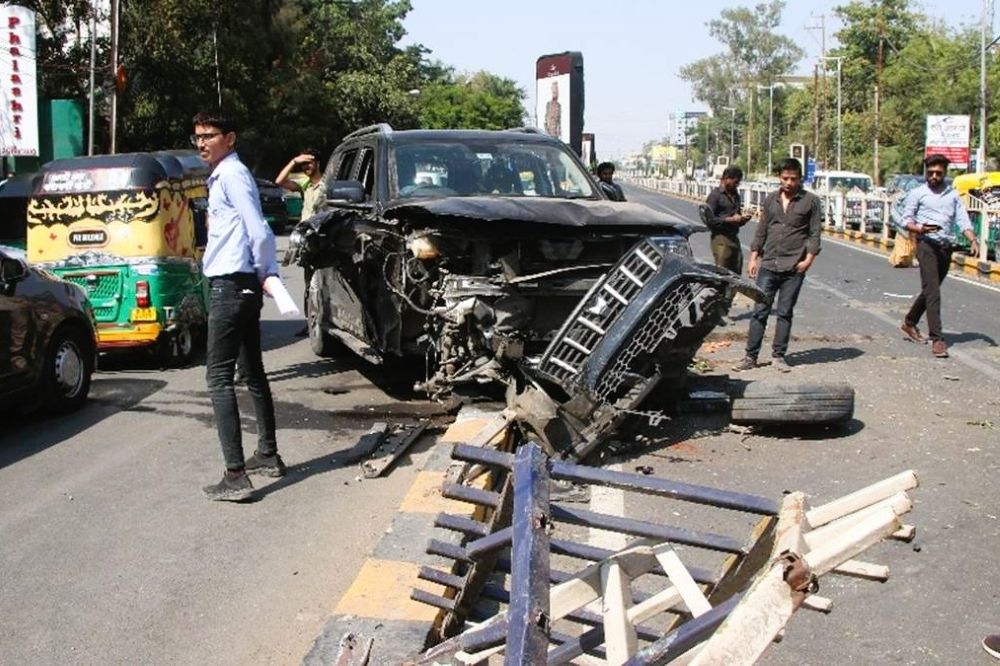
Road accidents are not just a traffic problem they are increasingly becoming a young people’s safety crisis.
In Indore, around 65% of people losing their lives in road accidents are reportedly between 18 and 35 years of age. The figure brings into focus a disturbing reality: the age group that represents the city’s workforce, students, entrepreneurs and young families is also among the most vulnerable on its roads.
The Most Productive Years Are Being Lost
The 18–35 age bracket is a critical phase of life. Young people are entering higher education, starting careers, building businesses, supporting families and planning their futures. Yet road crashes are taking a significant toll during precisely these years.
The broader national picture reinforces the concern. According to the Ministry of Road Transport and Highways, people aged 18–45 accounted for 66.4% of road accident deaths in India in 2023, while the working-age group of 18–60 accounted for 83.4%.
This means every fatal crash involving a young person represents much more than an individual tragedy, it can affect an entire family and its economic future.
Why Young Road Users Are Particularly Vulnerable
Speeding, risky overtaking, failure to follow traffic rules, distracted driving and unsafe two-wheeler use can dramatically increase the consequences of a crash.
National road accident data also shows that two-wheelers remain one of the most vulnerable categories of road users. In 2023, two-wheeler riders accounted for a substantial share of fatalities, while excessive speed remained a major factor behind deadly crashes.
For a city like Indore, where two-wheelers are an essential part of everyday mobility, road safety therefore cannot depend only on enforcement after an accident. It has to begin with behaviour before one happens.
A Road Safety Problem Is Also a Behaviour Problem
Better roads, traffic signals, surveillance systems and enforcement are important. But infrastructure alone cannot eliminate accidents.
A safe-road culture also requires drivers and riders to:
- Respect speed limits
- Wear helmets and seat belts consistently
- Avoid mobile-phone use while driving
- Never drive under the influence of alcohol
- Follow lane discipline and traffic signals
- Avoid dangerous overtaking and wrong-side driving
- Give pedestrians and other vulnerable road users adequate space
These may sound like basic rules, but road safety statistics show how costly it can be when basic precautions are ignored.
The Cost Goes Beyond the Crash
When a young person dies in a road accident, the loss extends far beyond the accident site. There may be parents who lose a child, children who lose a parent, businesses that lose a young professional and families that suddenly face financial and emotional uncertainty.
A road accident therefore has a social and economic cost that cannot be measured only by the number of vehicles damaged or cases registered.
Indore Needs a Youth-Centred Road Safety Approach
If nearly two-thirds of road accident fatalities involve people in the 18–35 age group, road-safety campaigns must speak directly to young road users. Colleges, workplaces, driving schools, traffic authorities and community organisations can all play a role in creating stronger awareness around responsible driving.
The objective should not simply be to issue more challans. It should be to create a culture where reaching safely matters more than reaching quickly.
Indore Talk Take
A statistic like 65% is not just a number, it represents an entire generation at risk.
Indore is growing rapidly, its roads are getting busier, and mobility is becoming an increasingly important part of urban life. But a truly modern city cannot measure progress only by the roads it builds or the vehicles it accommodates.
It must also ask a more fundamental question:
Are its people reaching home safely?
For Indore’s young population, road safety cannot remain an occasional awareness campaign. It needs to become a daily habit—because no destination is important enough to risk a life.