


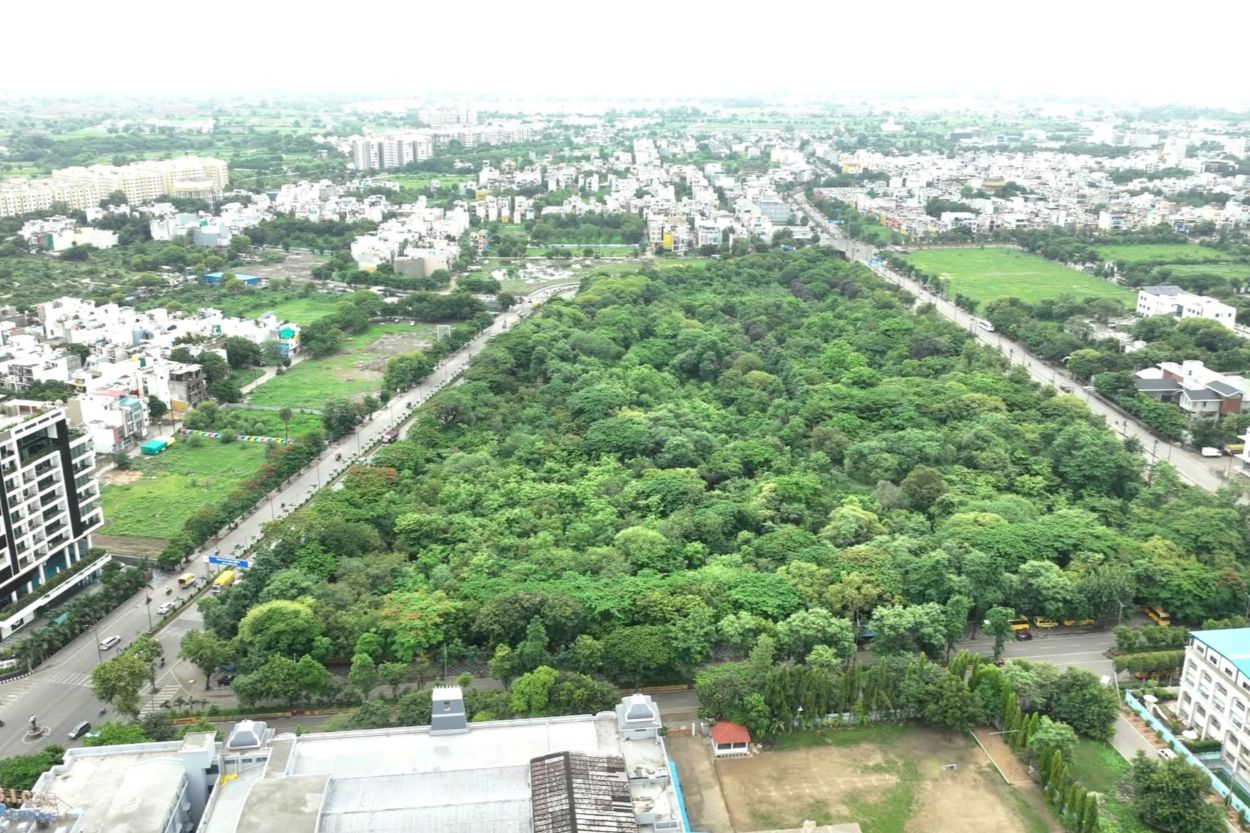
 The Gist: Indore is preparing for one of its most ambitious green initiatives yet. The Indore Development Authority (IDA) is set to develop a 100-acre City Forest using the Miyawaki afforestation technique, with nearly 2.5 lakh saplings to be planted. The project aims to create a dense urban forest in just 3–4 years, enhancing the city’s green cover and environmental resilience.
Key Highlights
 A 100-acre City Forest will be developed by IDA.
 Around 2.5 lakh native saplings will be planted.
 The forest will use the Miyawaki technique, known for creating dense forests in a shorter time.
 Work on the project is expected to begin this month.
Why It Matters
As Indore expands rapidly with new roads, metro corridors, and urban development, green spaces are becoming just as important as grey infrastructure. A large urban forest can help improve air quality, reduce urban heat, support biodiversity, and create healthier public spaces for future generations.
The Story
Indore’s skyline is changing rapidly. New residential townships, commercial hubs, metro corridors, and road infrastructure are reshaping the city every year. Alongside this growth, however, comes an equally important challenge—preserving and expanding urban green spaces.
To address this, the Indore Development Authority (IDA) has announced plans to develop a 100-acre City Forest, one of the largest urban afforestation projects proposed for the city. Around 2.5 lakh saplings will be planted using the Miyawaki method, a technique that involves planting diverse native species closely together to encourage faster growth and create dense vegetation within a few years.
Unlike conventional plantations, Miyawaki forests are designed to mimic natural ecosystems by combining multiple native species in a compact area. Once established, they can help improve local biodiversity, reduce dust, absorb carbon, provide shade, and contribute to lowering temperatures in surrounding urban areas. While the technique has been successfully implemented in several parts of India, experts also note that long-term maintenance, species selection, and adequate water management are critical to its success.
For Indore, this project could become much more than another plantation drive. It has the potential to create a permanent ecological asset that benefits residents through cleaner air, recreational space, and improved environmental resilience.
As climate change increases the frequency of heatwaves and urban temperatures continue to rise, investments in green infrastructure are becoming just as important as investments in roads, flyovers, and buildings.
 Indore Talk Take
Cities are often remembered by their landmarks, but they are sustained by their green spaces.
A 100-acre urban forest is not merely a plantation project, it is an investment in Indore’s future climate, public health, and quality of life. The true success of this initiative, however, will not be measured by the number of saplings planted on Day One. It will be measured years later by the number of trees that survive, the biodiversity they support, and the difference they make to the city’s environment.
As Indore continues to grow vertically and horizontally, perhaps every major development project should ask one question: Can we build more without growing less green?
 Indore Talk | Beyond the Headlines, Into the City’s Story
Bringing you the developments, debates, and decisions shaping the future of Indore.