


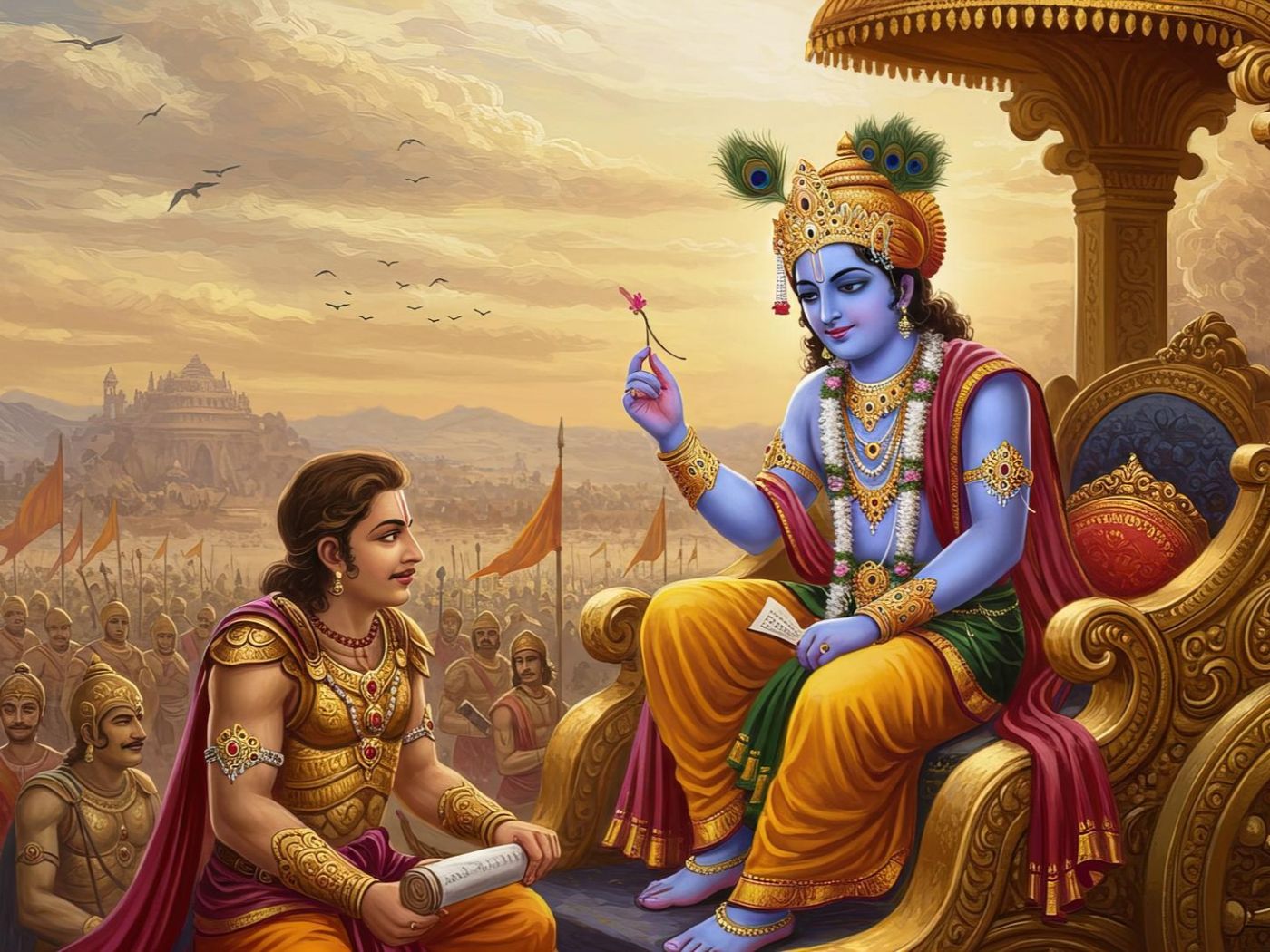
Imagine standing on a battlefield.
Not with weapons in your hands, but with deadlines, expectations, uncertainties, social pressures, financial responsibilities, and countless decisions competing for your attention.
Sounds familiar?
More than 5,000 years ago, Arjuna found himself in a remarkably similar state of mind. As he stood on the battlefield of Kurukshetra, he was overwhelmed by fear, confusion, doubt, and emotional paralysis. His hands trembled, his mind raced, and he felt unable to move forward.
Today, psychologists might call it anxiety.
The fascinating part is that the Bhagavad Gita begins not with a war, but with a conversation about a troubled mind.
Anxiety Begins When We Focus on What We Cannot Control
One of the biggest causes of modern anxiety is our obsession with outcomes.
Will I succeed?
What if I fail?
What will people think?
What does the future hold?
The Bhagavad Gita offers a timeless perspective:
“You have a right to perform your duties, but not to the fruits of your actions.”
This does not mean we should stop caring about results. It means we should stop allowing results to control our peace of mind.
The future is uncertain. Our actions are not.
When we shift our attention from outcomes to effort, anxiety begins to lose its grip.
The Mind Can Be Your Friend or Your Enemy
Modern life constantly pulls our attention outward.
Notifications. News. Comparisons. Opinions.
The Gita reminds us that an uncontrolled mind creates suffering, while a disciplined mind becomes our greatest ally.
Many of our worries are not caused by reality itself but by stories our minds create about reality.
The challenge is not always changing circumstances.
Sometimes it is learning to observe our thoughts without becoming trapped by them.
Comparison Creates Restlessness
Social media has made comparison a daily habit.
We compare careers, lifestyles, relationships, achievements, and even happiness.
The Gita teaches that every individual has a unique path and purpose. Measuring your journey against someone else’s often leads to dissatisfaction and confusion.
A lotus does not compete with a rose.
It simply blooms.
Perhaps the same wisdom applies to us.
Action Is the Antidote to Anxiety
When Arjuna wanted to withdraw from the battlefield, Lord Krishna did not advise him to escape his responsibilities.
Instead, he encouraged him to act with clarity and courage.
Anxiety often grows when we remain stuck in overthinking.
Action creates momentum.
The smallest step forward is often more powerful than hours of worry.
Peace Comes From Within
Modern society teaches us to seek peace through achievements, possessions, recognition, or external validation.
The Gita offers a different perspective.
True peace comes not from controlling the world around us but from understanding ourselves.
External circumstances will continue to change.
Challenges will continue to arise.
But a calm mind can face uncertainty with strength.
A Thought to Reflect Upon
Perhaps the Bhagavad Gita remains relevant today because human nature has not changed.
The battlefield may look different.
The weapons may be different.
But fear, doubt, uncertainty, and anxiety still accompany the human journey.
The message of the Gita is not that life will become easier.
It is that we can become stronger, wiser, and more balanced in the face of life’s challenges.
And sometimes, that is exactly the lesson an anxious mind needs.
 Reflection
Ask yourself:
“Am I worrying about something beyond my control, or am I focusing on the actions I can take today?”
The answer may reveal the first step toward peace.
Mindful Living by Indore Talk
Stories That Help You Live Better.