


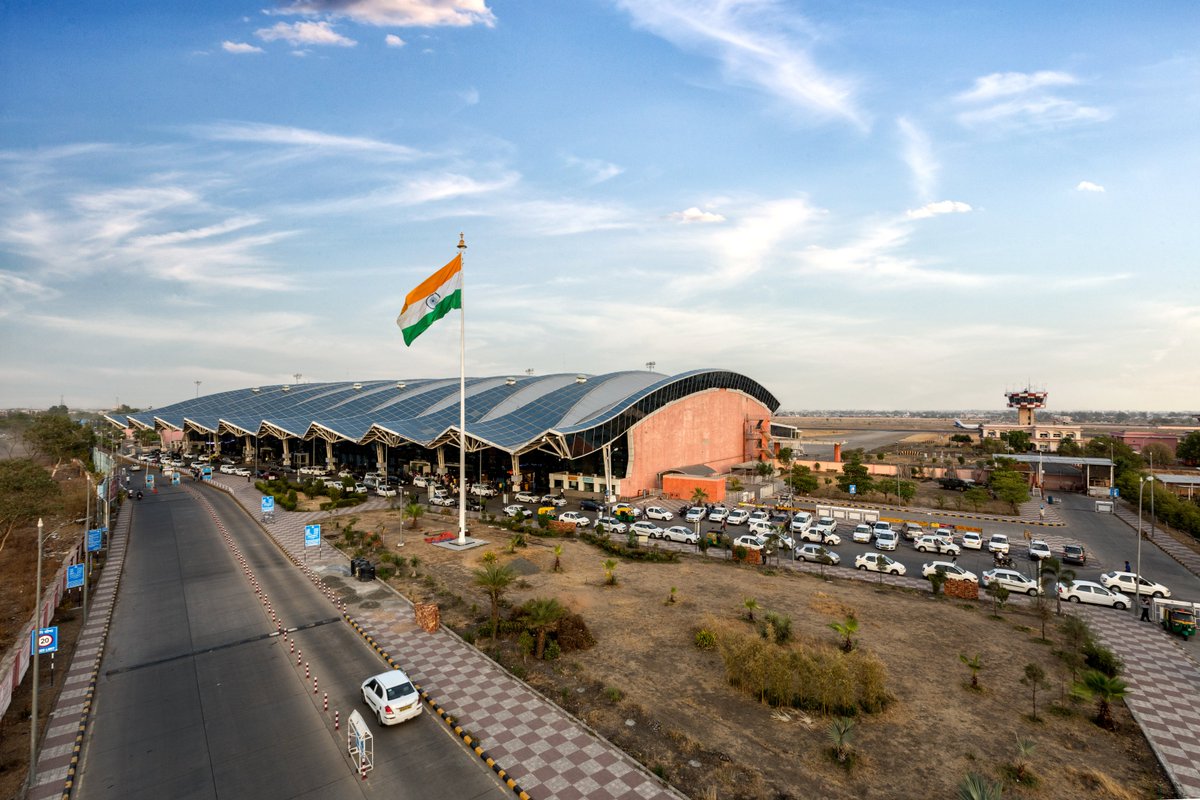
⚡ The Gist: Nearly four months after its inauguration, Terminal-1 at Devi Ahilyabai Holkar Airport is still awaiting passenger operations. Built at an estimated cost of ₹50 crore, the terminal was expected to ease congestion and handle nearly 10 lakh additional passengers annually. While the infrastructure is complete, operational delays have kept its doors closed.
Key Highlights
- Terminal-1 was inaugurated in March 2026.
- Designed to increase the airport’s annual passenger handling capacity to 50 lakh.
- Around 16 daily flights were expected to shift to the new terminal.
- Passenger operations remain pending due to security clearances, CISF deployment, and operational formalities.
- Travellers continue using the existing terminal despite increasing passenger traffic.
Why It Matters
Indore is one of India’s fastest-growing Tier-2 cities, with air travel demand rising every year. Delays in operationalising completed infrastructure affect passenger convenience, reduce the expected benefits of public investment, and slow the city’s aviation growth.
The Story
When Terminal-1 at Devi Ahilyabai Holkar Airport was inaugurated in March 2026, it symbolized another milestone in Indore’s growing aviation journey. The renovated terminal was expected to decongest the existing passenger terminal, improve operational efficiency, and accommodate the city’s rapidly increasing air traffic.
The plan was ambitious. Beginning in April, several regional flights, particularly those operated using ATR aircraft, were expected to shift to the new terminal. Airlines such as IndiGo, Alliance Air, and Star Air were among those likely to benefit from the expanded infrastructure.
However, months later, the terminal remains non-operational.
Reports suggest that pending security clearances, the deployment of additional CISF personnel, and completion of operational procedures have delayed the commencement of passenger services. As a result, all flights continue to operate from the existing terminal, where passenger volumes continue to grow.
The situation has sparked a broader conversation that extends beyond airports.
Across India, citizens increasingly see modern infrastructure inaugurated with much anticipation, only to wait weeks or even months before it becomes fully functional. While inaugurations celebrate project completion, the real value of public infrastructure begins only when people can actually use it.
For Indore, an airport is more than a transport hub. It is the city’s gateway for business, tourism, education, healthcare, and investment. Every delay in utilising ready infrastructure postpones the benefits that citizens and the local economy were meant to receive.
🎙️ Indore Talk Take
Infrastructure should not be measured by the date of its inauguration, it should be measured by the day it starts serving people.
Security clearances and operational readiness are essential, and no compromise should ever be made on passenger safety. But they also raise an important planning question: Should public projects be inaugurated only after every approval, staffing requirement, and operational process is complete?
For citizens, a ribbon-cutting ceremony is symbolic. What truly matters is the day they walk through those doors, board their flight, and experience the infrastructure they helped fund through public investment. As Indore continues to emerge as a leading business and aviation hub, timely operationalisation of completed projects will be just as important as building them.
📍 Indore Talk | Beyond the Headlines, Into the City’s Story
Bringing you the developments, debates, and decisions shaping the future of Indore.