


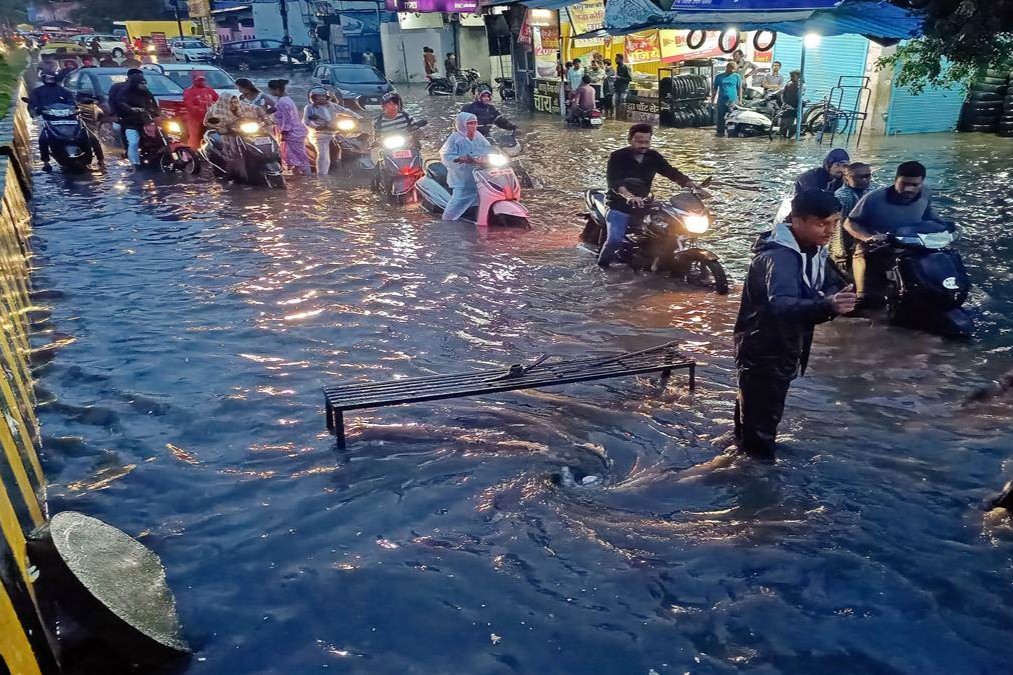
 The Gist: Just couple of days of monsoon rain have exposed a recurring urban problem in Indore. Major roads and intersections are submerged, traffic is crawling for hours, and thousands of commuters are paying the price in wasted time, fuel, and productivity. Despite years of infrastructure projects and crores spent on drainage improvements, the city continues to struggle with one basic question: Where does the rainwater go?
Key Highlights:
- More than 20 major junctions witnessed severe waterlogging.
- Traffic jams stretched for hours across Ring Road, Vijay Nagar, Khajrana, Nipania, and Bengali Square.
- Vehicles moved at crawling speeds due to flooded roads and service lanes.
- Ongoing infrastructure projects further worsened road conditions during rainfall.
- Daily commuters suffered loss of time, fuel, and increased accident risks.
Why It Matters
Waterlogging is no longer just a monsoon inconvenience, it’s becoming an economic, environmental, and public safety issue that affects every citizen travelling through Indore.
The Story
For many Indore residents, the arrival of the monsoon no longer brings only relief from the summer heat, it brings uncertainty about whether they’ll reach home or work on time.
This year’s first spell of heavy rain has once again exposed the city’s fragile storm water management system. Key intersections, including Robot Square, Bengali Square, Vijay Nagar, Radisson Square, Nipania, Dewas Naka, Khajrana, and long stretches of Ring Road, witnessed severe waterlogging, leaving thousands of commuters stranded in bumper-to-bumper traffic.
Ironically, these are some of the city’s busiest corridors and have also been the focus of major infrastructure investments over the past few years. Metro construction, flyovers, bridges, sewer networks, and road widening projects have transformed Indore’s skyline. Yet, beneath these modern developments lies an old problem that remains largely unresolved, efficient storm water drainage.
When roads remain submerged after moderate rainfall, traffic slows to a crawl. Vehicles consume more fuel while idling, commuters lose valuable working hours, emergency services are delayed, businesses suffer from reduced accessibility, and two-wheeler riders face an increased risk of accidents hidden beneath muddy water.
The situation becomes even worse where road excavation for ongoing projects has disrupted natural drainage paths. Instead of flowing away, rainwater collects at major intersections, effectively turning them into temporary ponds.
The question is no longer whether Indore is developing, it clearly is. The real question is whether the city’s underground infrastructure is keeping pace with what is visible above the ground.
 Indore Talk Take
Indore has rightly earned national recognition for cleanliness and urban innovation. But a truly world-class city isn’t judged only by its flyovers, metro pillars, or beautified roads, it is judged by how efficiently it functions during the most challenging days.
Storm water drainage is invisible infrastructure. Citizens rarely notice it when it works, but everyone suffers when it doesn’t.
Perhaps it’s time the conversation shifted from “How many roads have been built?” to “How many roads can survive a heavy rainfall?” Because every hour spent in a traffic jam isn’t just an inconvenience—it’s lost productivity, wasted fuel, economic loss, higher pollution, and a reminder that smart cities are built both above and below the surface.
📍 Indore Talk | Beyond the Headlines, Into the City’s Story
Bringing you the developments, debates, and decisions shaping the future of Indore.