


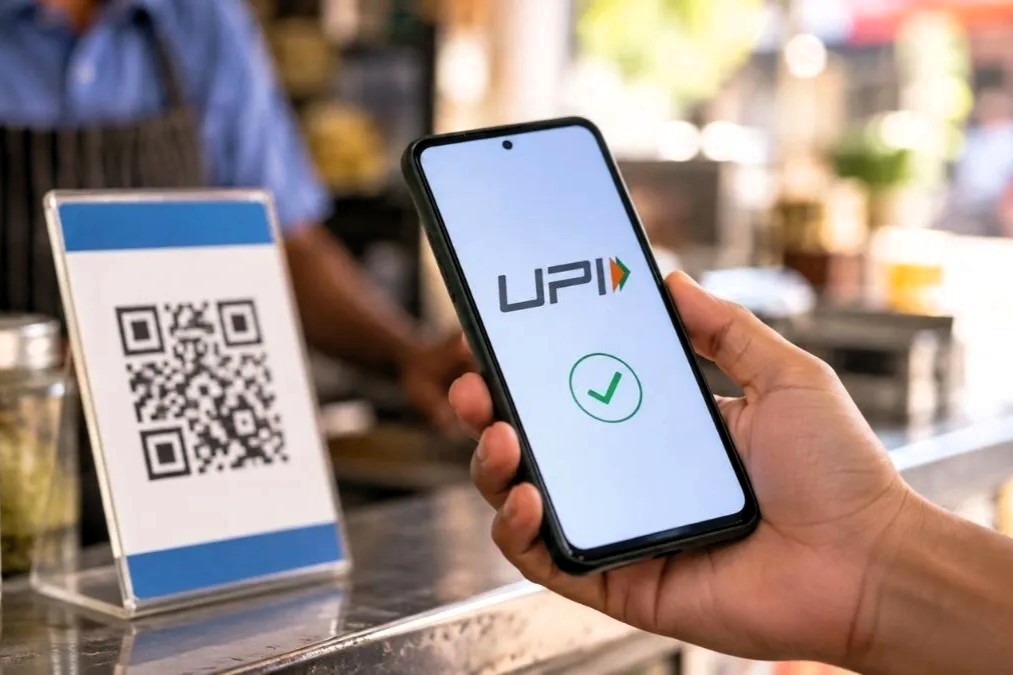
⚡ The Gist: India’s UPI ecosystem is entering a new phase from October 15, 2026. Selected UPI payments above ₹2,000 will attract a Merchant Discount Rate (MDR) of 0.4%, capped at ₹300 per transaction.
But there is an important distinction: the charge is on eligible merchants, not consumers. Person-to-person transfers, UPI payments up to ₹2,000 and several other transactions will remain outside the new MDR structure. Small merchants meeting the prescribed threshold will also remain exempt.
The Story
For millions of Indians, UPI has become almost invisible infrastructure. Whether it is paying at a restaurant, buying groceries, transferring money to family or paying a bill, the expectation has been simple: scan, enter the amount and pay. That model is now changing for some higher-value merchant transactions.
From October 15, eligible UPI payments above ₹2,000 made to merchants will attract an MDR of 0.4%, with the charge capped at ₹300. So a ₹10,000 payment would generate an MDR of ₹40 for the merchant, while a ₹75,000 or larger eligible transaction would hit the ₹300 cap.
However, this does not mean that consumers will suddenly be charged ₹40 for making a ₹10,000 UPI payment. The MDR is a merchant-side charge, and banks have been advised to ensure that merchants do not pass the cost on to customers.
There is also a separate flat-rate structure for certain categories. Eligible payments above ₹2,000 involving railways, fuel, insurance, telecom and specified utility or government services will attract a flat ₹5 MDR rather than the standard 0.4%.
For example, a ₹50,000 qualifying insurance or fuel payment would carry a ₹5 merchant-side MDR rather than ₹200 under the standard 0.4% structure.
Everyday person-to-person transfers remain free. UPI payments up to ₹2,000 also remain outside the MDR framework, while eligible small merchants receiving up to ₹1 lakh per month through UPI QR payments will continue to be exempt.
The larger reason behind the change is the economics of maintaining a payment network operating at enormous scale. The revised framework is intended to support investment in UPI infrastructure, cybersecurity and the broader digital-payment ecosystem while keeping consumer-facing UPI usage largely frictionless.
For businesses, however, the change could become another operating-cost consideration. Restaurants, retailers, e-commerce platforms and other businesses handling higher-value UPI payments will need to account for the MDR, even though the customer experience is expected to remain unchanged.
The real question, therefore, is not simply “Will UPI become chargeable?”
It is: Can UPI introduce a sustainable cost structure without weakening the simplicity and trust that made it one of India’s most widely used payment systems?
🎙️ Indore Talk Take
For consumers, the immediate message is reassuring: UPI is not suddenly becoming a paid service. But for businesses, the equation is different. A payment method that once carried virtually no direct merchant-side MDR for these transactions will now become a cost to factor into operations.
Indore has embraced digital payments across everything from neighbourhood shops and restaurants to large retailers and service businesses. The impact of this change will therefore be felt less at the individual consumer level and more in how businesses manage their payment costs.
UPI changed the way India pays.
Now, its next challenge is to prove that a massive digital payment ecosystem can become financially sustainable without losing the simplicity that made people trust it in the first place.